
Why Do Bettas Flare?

By Conner Tighe
If you’ve ever seen your betta suddenly puff out its gills, spread its fins, and look like it’s ready to fight its own reflection, you’ve witnessed a behavior called flaring. It can be dramatic, impressive, and maybe a little funny — but it also has an important purpose.
Bettas flare as a form of communication. In the wild and in aquariums, flaring helps them appear larger when they feel territorial, threatened, overstimulated, or interested in another betta. While occasional flaring is a normal part of betta behavior, frequent or constant flaring can be a sign that something in the environment is stressing them out.
Understanding why bettas flare can help keepers distinguish natural behavior from a potential welfare concern. By paying attention to when, where, and how often your betta flares, you can better understand what your fish may be trying to communicate.
What Does Betta Flaring Look Like?
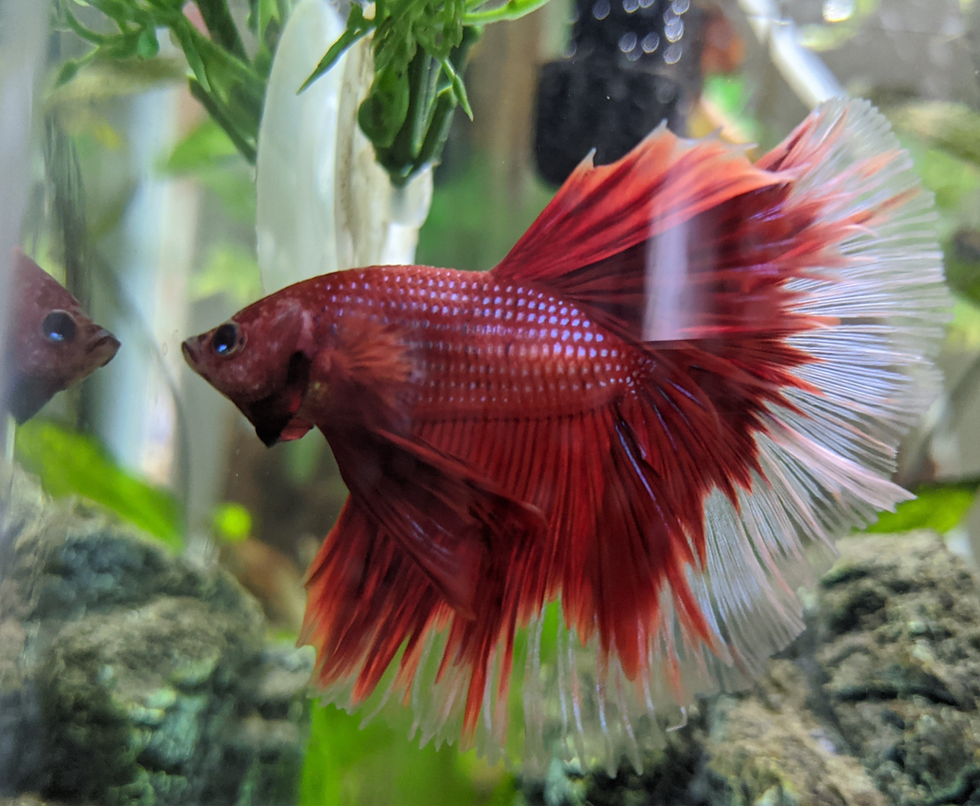
Betta flaring is usually easy to recognize once you know what to look for. When a betta flares, it spreads its gill covers outward, making the area around its face appear larger and more dramatic. This often reveals the betta’s “beard,” which is a dark membrane located beneath the gills. At the same time, the betta may spread its fins, stiffen its body, and hold itself in a bold, alert posture.
Some bettas flare while staying mostly still, as if trying to stare down whatever caught their attention. Others may swim back and forth, charge toward the glass, circle a certain area, or follow a reflection or object around the tank. The behavior can look intense because the betta is trying to appear bigger and more intimidating.
Flaring is most commonly associated with male bettas, but females can flare, too. Female bettas may not always display as dramatically as males, but they are still capable of raising their gill covers, spreading their fins, and exhibiting territorial or defensive behavior.
Because flaring can happen quickly, it is helpful to pay attention to the context. A betta that flares briefly at movement near the tank may simply be reacting to a sudden change. A betta that flares repeatedly at the same corner of the glass, however, may be seeing its reflection or responding to something in the environment. Watching when and where flaring happens can help you better understand what your betta is reacting to.
Reason #1: Territorial Instinct
One of the most common reasons bettas flare is territorial behavior. Bettas are naturally protective of their space, and flaring is one way they warn other fish or perceived rivals to stay
away. By spreading their gill covers and fins, bettas make themselves look larger and more intimidating, which can help them defend their territory without immediately resorting to physical fighting.
This behavior is especially common in male bettas. In the wild, male bettas may claim small territories where they build bubble nests, look for food, and guard their space from other males. In an aquarium, that same instinct can still show up even when there are no other bettas nearby. A betta may flare at a tank mate, a moving object, a person approaching the glass, or even its own reflection.
Territorial flaring can also happen when a betta feels that part of the tank belongs to them. For example, your betta may guard a favorite plant, cave, corner, or feeding area. If another fish gets too close, the betta may flare as a warning before chasing or nipping. This is one reason it is important to choose tank mates carefully and watch how your betta reacts to them.
Because of their territorial nature, two male bettas should never be housed together in the same tank. They are likely to see each other as rivals, which can lead to constant stress, injuries, or serious fighting. Some female bettas may also be territorial, so they should not automatically be considered peaceful community fish.
Occasional territorial flaring is normal, but frequent aggression is a sign that something may need to change. If your betta is constantly flaring at tank mates, patrolling the glass, or chasing other fish, the tank may be too stressful. Adding more plants, hides, and visual barriers can help break up the space and make the environment feel safer.
Reason #2: Seeing Their Reflection
Another common reason bettas flare is because they see their own reflection. While it may be obvious to us that a betta is looking at itself in the glass, the fish does not understand reflections the same way humans do. Instead, your betta may think another betta has entered its territory.
This can happen when the tank glass becomes reflective, especially if the aquarium light is brighter than the surrounding room. In that situation, the inside of the glass can act almost like a mirror. Your betta may notice the “other fish,” flare its gills, spread its fins, and try to chase the reflection away.
Reflections can also come from mirrors, shiny decorations, dark backgrounds, or certain angles of light around the tank. Some bettas only flare at their reflection occasionally, while others may return to the same spot again and again because they believe a rival is still there.
A short burst of reflection-related flaring is not always a major concern, but constant flaring can become stressful. If your betta spends long periods fighting its reflection, it may become exhausted, frustrated, or unable to fully relax in its own environment.
To reduce reflection-related flaring, try adjusting the lighting around the tank. Turning on the room light before the aquarium light can help reduce the mirror effect on the glass. You can also add a tank background, move shiny objects away from the aquarium, or place plants and decorations near reflective areas to break up the view.
The goal is not to stop your betta from ever flaring. Flaring is a natural behavior. However, if your betta seems locked into a constant battle with its reflection, changing the setup can make the tank feel calmer and safer.
Reason #3: Stress or Feeling Threatened
Bettas may also flare when they feel stressed, threatened, or overstimulated. While flaring is often associated with territorial behavior, it can also be a defensive response. If a betta feels unsafe, it may flare to make itself look larger and warn the perceived threat to back off.
Stress-related flaring can be caused by several things in the tank environment. Aggressive or overly active tankmates may make a betta feel like it has to constantly defend itself. Bright lights, sudden movements, loud vibrations, or too much activity around the aquarium can also make some bettas feel on edge. Even changes outside the tank, such as people walking by often or objects being moved near the glass, may trigger a reaction.
Poor water quality can also contribute to stress. If ammonia, nitrite, or nitrate levels are unsafe, or if the water temperature is too cold or unstable, a betta may become more reactive. A stressed betta may flare more often because it is already uncomfortable and less able to relax in its environment.
It is important to look at the full picture. Flaring alone does not always mean something is wrong, but flaring combined with other signs of stress should not be ignored. Watch for clamped fins, faded color, hiding more than usual, loss of appetite, glass surfing, heavy breathing, or lethargy. These signs may suggest that your betta is not just displaying natural behavior but reacting to an ongoing problem.
If your betta seems to be flaring because of stress, start by checking the basics. Test the water, make sure the temperature is warm and stable, and look closely at how any tank mates are behaving. Adding plants, caves, floating cover, and other hiding places can also help your betta feel more secure. A calmer environment gives your betta more opportunities to rest rather than stay alert constantly.
Reason #4: Courtship and Breeding Behavior
Bettas may also flare as part of courtship and breeding behavior. When a male betta is interested in a female, he may spread his fins, flare his gills, and display his body to get her
attention. This behavior can resemble aggression, but in a breeding context, it may be part of how bettas communicate their interest, strength, and readiness to mate.
Male bettas are especially known for building bubble nests. These nests are made of small bubbles at the water’s surface and are often created when a male betta is mature, comfortable, or responding to breeding instincts. If a male sees or senses a female nearby, he may flare more often while guarding the nest or showing off around that area of the tank.
However, courtship does not mean bettas are automatically safe together. Breeding behavior can quickly become stressful or aggressive, especially if one fish is not receptive. A male may chase, nip, or harass a female, and a female may also act defensively. Because of this, betta
breeding should only be attempted by experienced keepers who understand how to monitor behavior and separate the fish when needed.
For most everyday betta keepers, courtship-related flaring is more likely to happen when a betta sees another betta nearby, notices movement outside the tank, or reacts to a situation that triggers breeding instincts. Even if the flaring appears beautiful or impressive, it is important to watch for signs that the fish is becoming stressed.
If your betta flares around another betta, do not assume it is harmless flirting. Whether the behavior is territorial, defensive, or courtship-related, prolonged flaring can still be tiring. Keeping bettas in separate, calm environments is usually the safest way to prevent unnecessary stress and aggression.
Reason #5: Exercise and Stimulation
Some betta keepers use short flaring sessions as a form of exercise or mental stimulation. Because flaring causes a betta to spread its fins, move around, and stay alert, it can encourage activity in fish that may otherwise spend a lot of time resting. In small amounts, this behavior may help a betta engage with its environment.
However, this should be done carefully. Flaring is not just a casual stretch — it is often a response to something the betta sees as a rival or threat. For that reason, mirrors or reflection-based enrichment should only be used briefly, if at all. A betta that is encouraged to flare for too long may become stressed, frustrated, or exhausted.
If you choose to use a mirror, keep the session very short and watch your betta closely. The goal should never be to make the fish flare until it looks tired or frantic. If your betta starts darting around the tank, breathing heavily, refusing to calm down, or continuing to search for the “other fish” after the mirror is removed, the session may have been too much.
There are also gentler ways to provide stimulation. A well-designed tank with live or silk plants, caves, floating cover, and safe places to explore can encourage natural behavior without relying on stress-based displays. Some bettas also enjoy investigating new hiding spots, resting on broad leaves, or following movement outside the tank during feeding time.
Flaring can be impressive to watch, but it should not be treated like entertainment for the keeper. Occasional, brief flaring may be normal, but constant stimulation through mirrors or reflections can negatively affect a betta’s well-being. A healthy environment should allow your betta to explore, rest, and feel secure — not feel like it has to defend itself all day.
Is Flaring Bad for Bettas?
Flaring is not automatically bad for bettas. In many cases, it is a normal behavior that helps them communicate, defend their space, and react to what is happening around them. A betta that flares briefly at movement near the tank, a reflection, or a new object is usually showing a natural response.
The concern comes from how often the flaring happens and how intense it becomes. Occasional flaring may only last a few seconds or minutes before the betta calms down and returns to normal activity. This type of brief display is usually not a major problem as long as the fish is eating, swimming normally, resting, and showing healthy color.
Constant flaring is different. If a betta spends long periods every day flaring at its reflection, chasing tank mates, or patrolling the glass, it may be experiencing ongoing stress. Over time, this can become exhausting. A betta that always feels like it has to defend itself may have fewer chances to rest, explore, and feel safe in its environment.
Flaring may also become a problem if it leads to injury. Some bettas charge at the glass, scrape themselves against decorations, nip at tankmates, or damage their fins during repeated displays. In these cases, the flaring is no longer just a dramatic behavior — it is a sign that the tank setup may need attention.
The best way to judge whether flaring is harmful is to look at the full picture. If your betta flares occasionally but otherwise seems active, curious, and healthy, it is likely just part of normal betta behavior. If the flaring is frequent, intense, or accompanied by signs of stress, such as faded color, clamped fins, hiding, heavy breathing, or loss of appetite, it is worth investigating the cause.
In general, flaring is something to observe rather than immediately fear. Your betta may be showing confidence, defending its space, or reacting to a temporary trigger. But if flaring becomes constant, the goal should be to reduce the source of stress and create a calmer, safer tank.
How to Reduce Unwanted Flaring
If your betta is flaring often, the goal is to figure out what is triggering the behavior and make the tank feel calmer. Since flaring is usually a response to a perceived threat, reflection, rival, or stressful environment, small changes to the setup can make a big difference.
One of the first things to check is lighting. Tank glass can become reflective when the aquarium light is much brighter than the surrounding room. If your betta keeps flaring at the sides of the tank, try turning on the room light before turning on the aquarium light. This can reduce the mirror-like effect on the glass, making reflections less noticeable.
Adding more cover can also help. Bettas often feel more secure when they have places to hide, rest, and break their line of sight. Live plants, silk plants, caves, floating plants, and broad leaves can give your betta more privacy. These features can also help block off reflective areas or visually separate your betta from tank mates.
If your betta lives with other fish, watch their interactions closely. Some tankmates may move too quickly, nip fins, or invade your betta’s favorite areas. Even peaceful fish can sometimes stress a betta if the tank is too small, too open, or too busy. If your betta is constantly flaring, chasing, or being chased, the tank mate situation may need to be adjusted.
It is also important to check the basics of betta care. Poor water quality, unstable temperatures, strong filter flow, or a lack of hiding places can all make a betta feel more stressed. Keeping the water clean, warm, and stable gives your betta a better chance to relax rather than stay alert all the time.
Finally, avoid leaving mirrors or shiny objects near the tank for long periods. While brief flaring may be normal, your betta should not feel like it has to defend its territory all day. Reducing reflections, adding cover, and creating a stable environment can help your betta feel safer and flare less often.
When Should You Worry?
While flaring is a normal betta behavior, there are times when it may point to a bigger problem. The main thing to watch is whether the flaring is brief and occasional or frequent and intense. A betta that flares for a few seconds and then moves on is very different from one that spends long periods every day fighting its reflection or reacting aggressively to everything around the tank.
You should pay closer attention if your betta seems unable to calm down after flaring. For example, if your betta keeps returning to the same area of the glass, charging at reflections, or constantly patrolling the tank, there may be an ongoing environmental trigger. This could be a reflection, a stressful tank mate, bright lighting, or a setup that does not offer enough cover.
Flaring can also be concerning if it is accompanied by physical or behavioral changes. Torn fins, scraped scales, heavy breathing, clamped fins, faded color, hiding more than usual, glass surfing, loss of appetite, or lethargy may suggest that your betta is stressed or unwell. These signs are especially important if they appear suddenly or continue for more than a short period.
It is also worth investigating if flaring leads to aggression toward tank mates. A betta that occasionally displays is not always a problem, but a betta that chases, nips, corners, or injures other fish may not be comfortable in a community setup. In some cases, the safest solution may be to separate the betta or to rethink the tank-mate arrangement.
If you are worried about your betta’s flaring, start by checking the tank environment. Test the water, confirm the temperature is stable, look for reflections, observe any tankmates, and make sure your betta has plenty of places to hide and rest. Flaring itself is not always the issue, but frequent flaring can be a clue that your betta is trying to tell you something about its surroundings.
This article was written by Conner Tighe.


Comments